← All carousels

Every great civilization built a place to store all human knowledge.

Most of them burned.

Cover — Every great civilization built a place to store all human knowledge. Most of them burned.
Library of Alexandria, Ptolemaic Egypt, 3rd century BCE — aimed to hold a copy of every book on Earth by seizing and copying scrolls off ships docked at the port, with holdings estimated as high as 400,000 papyrus scrolls; no single fire destroyed it, centuries of neglect and funding cuts did.
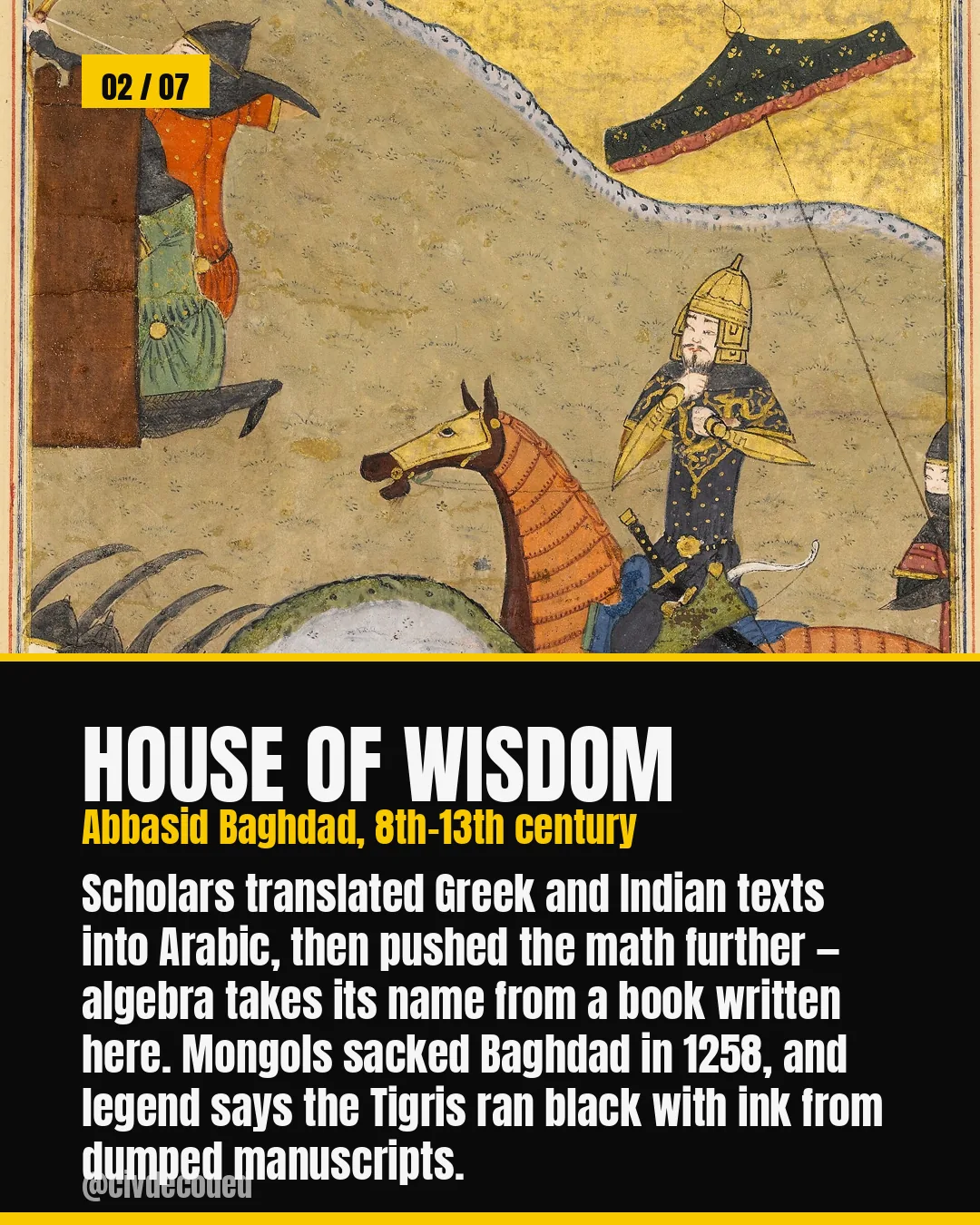
House of Wisdom, Abbasid Baghdad, 8th-13th century — scholars translated Greek and Indian texts into Arabic and pushed math further, with algebra taking its name from a book written here; Mongols sacked Baghdad in 1258 and legend says the Tigris ran black with ink from dumped manuscripts.
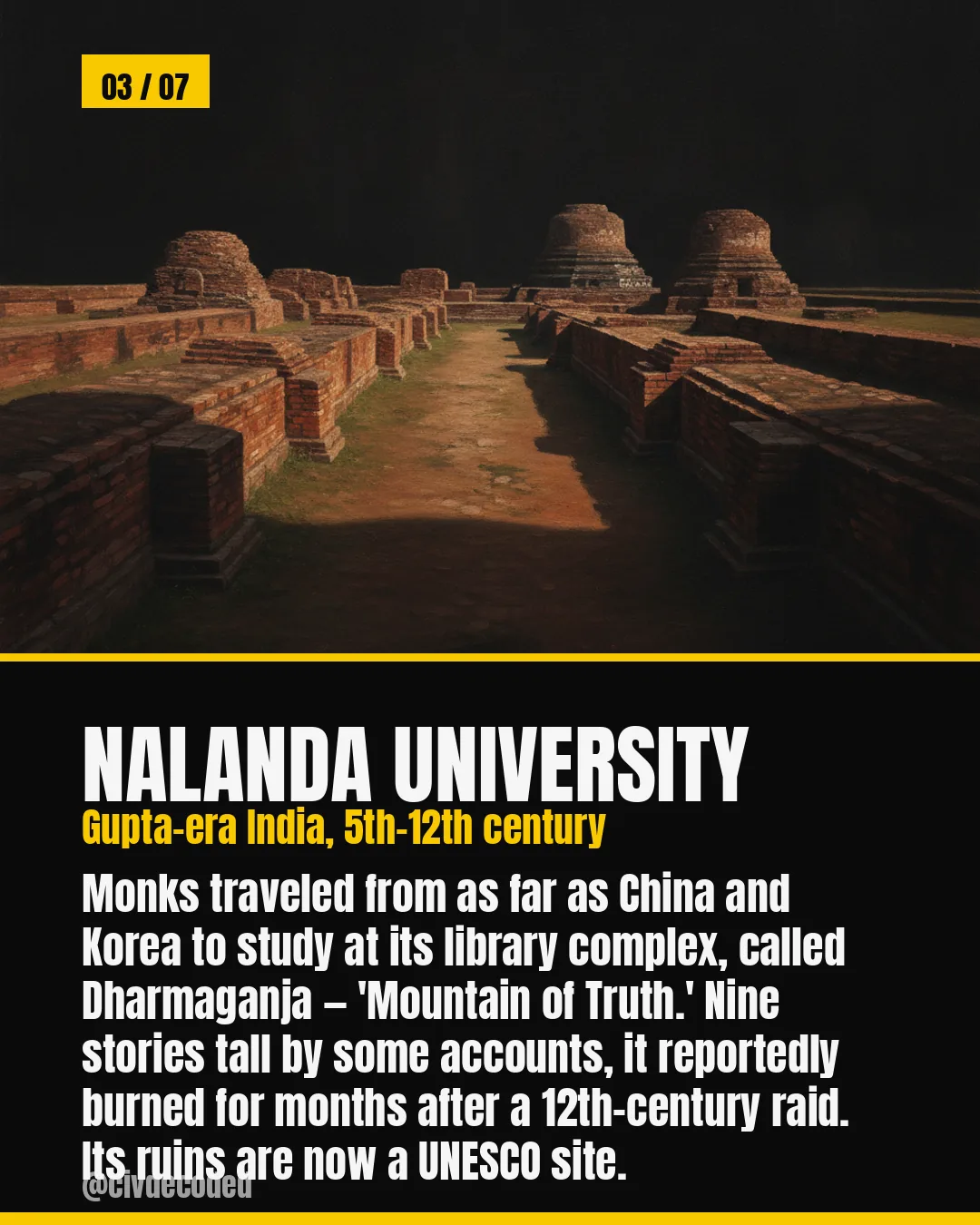
Nalanda University, Gupta-era India, 5th-12th century — monks traveled from as far as China and Korea to study at its library complex, Dharmaganja ('Mountain of Truth'), nine stories tall by some accounts; it reportedly burned for months after a 12th-century raid and its ruins are now a UNESCO site.
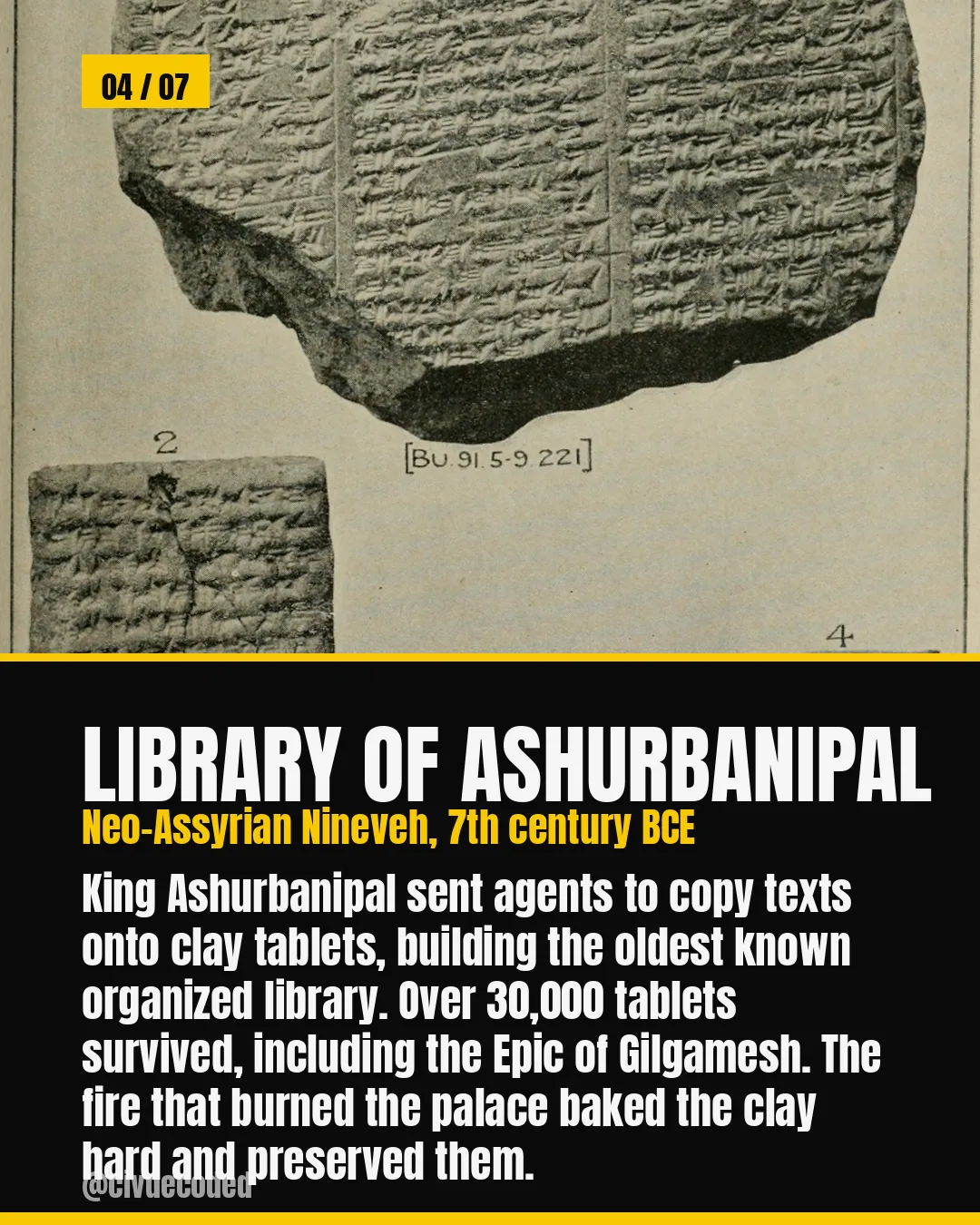
Library of Ashurbanipal, Neo-Assyrian Nineveh, 7th century BCE — King Ashurbanipal sent agents to copy texts onto clay tablets, building the oldest known organized library; over 30,000 tablets survived, including the Epic of Gilgamesh, because the fire that burned the palace baked the clay hard.
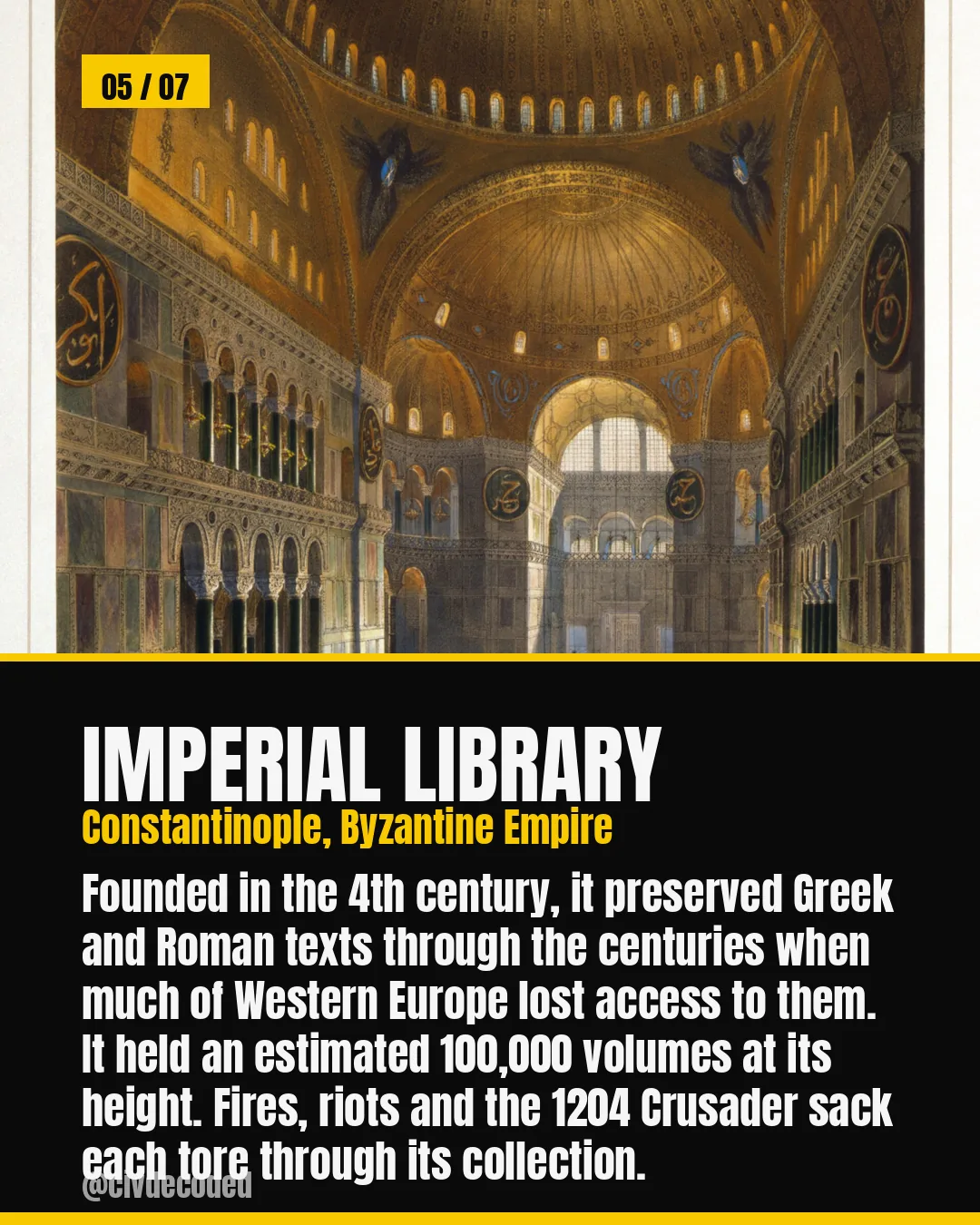
Imperial Library, Constantinople, Byzantine Empire — founded in the 4th century, it preserved Greek and Roman texts while much of Western Europe lost access to them, holding an estimated 100,000 volumes at its height before fires, riots, and the 1204 Crusader sack tore through its collection.
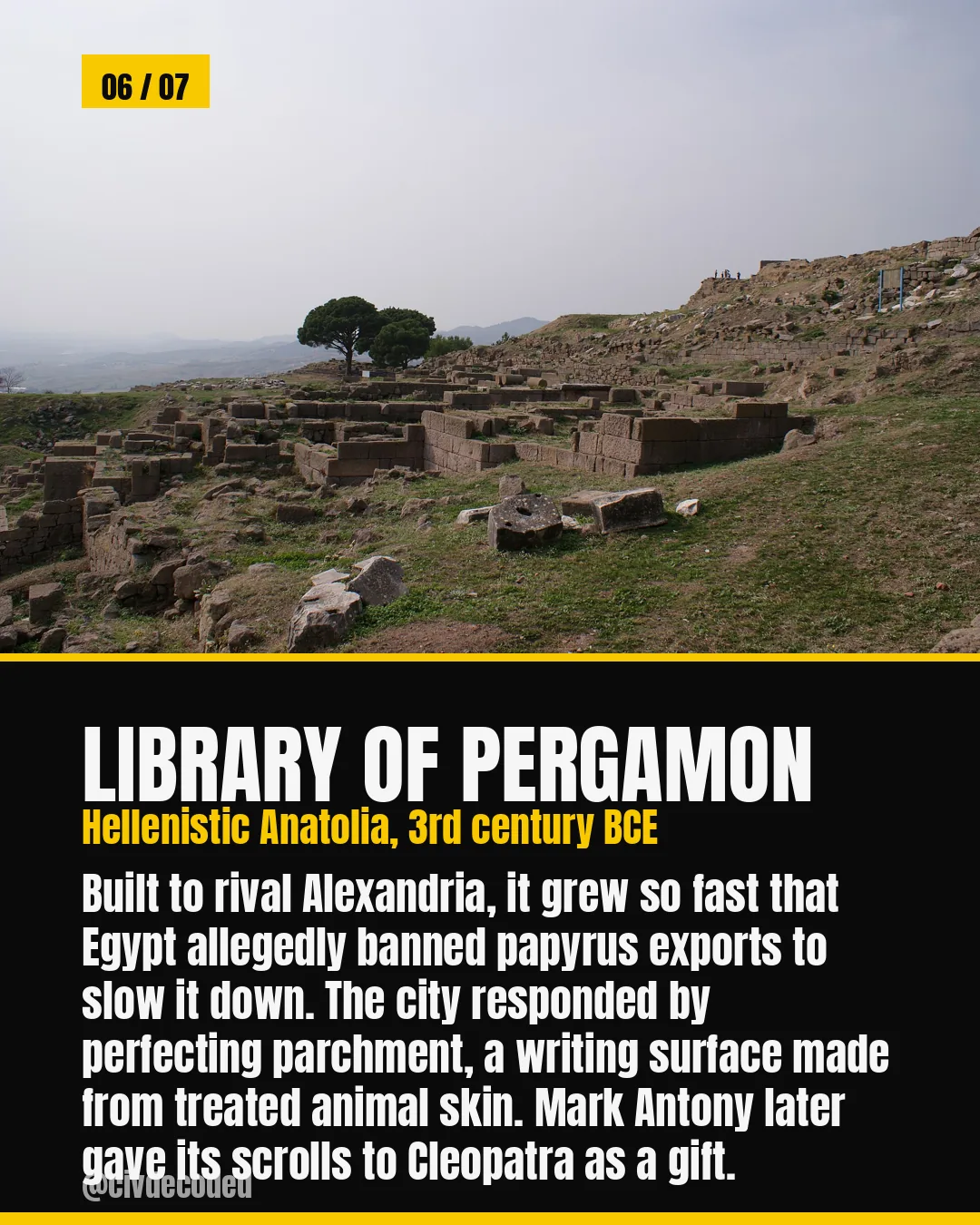
Library of Pergamon, Hellenistic Anatolia, 3rd century BCE — built to rival Alexandria, it grew so fast that Egypt allegedly banned papyrus exports to slow it down, so the city perfected parchment instead; Mark Antony later gave its scrolls to Cleopatra as a gift.
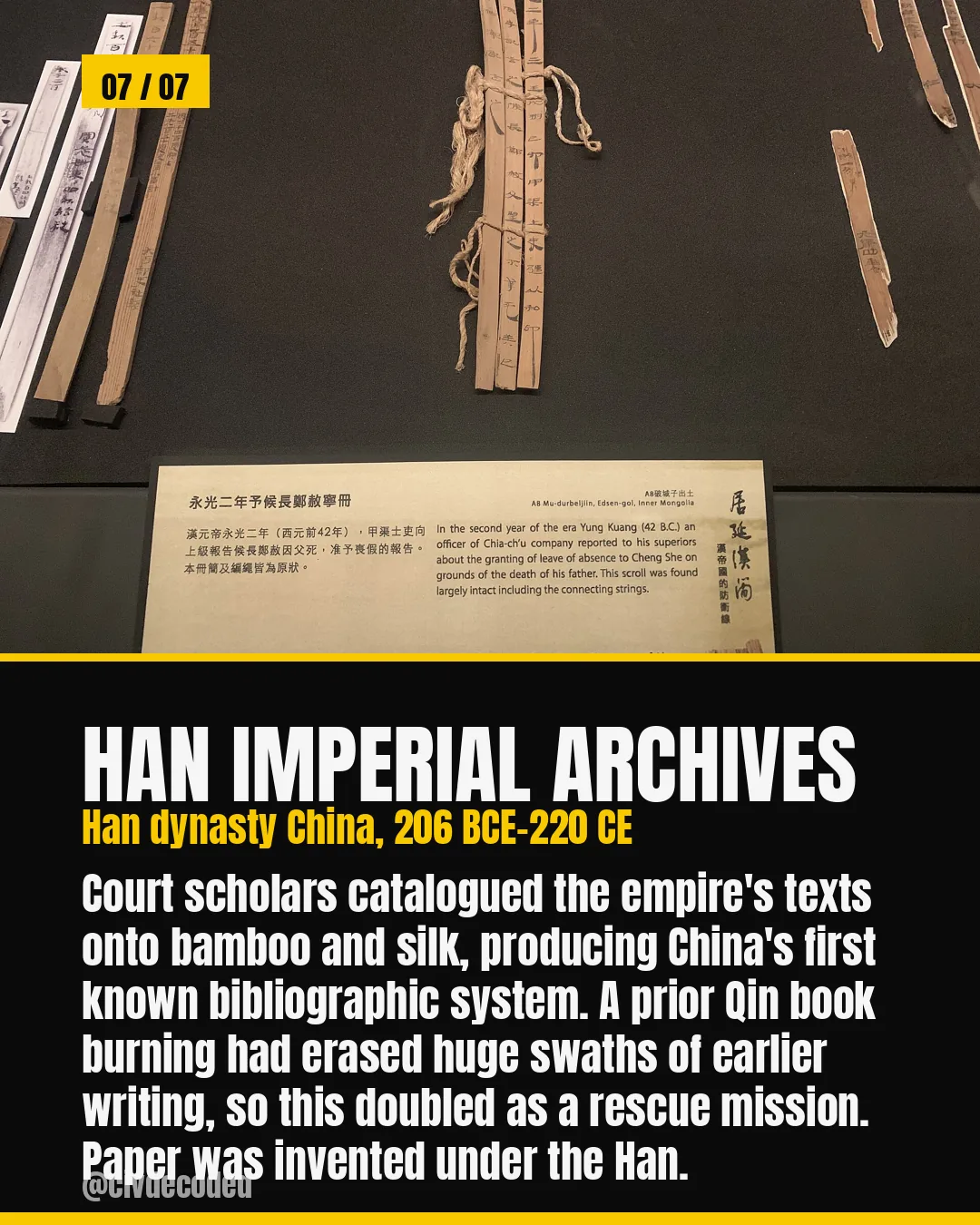
Han Imperial Archives, Han dynasty China, 206 BCE-220 CE — court scholars catalogued the empire's texts onto bamboo and silk, producing China's first known bibliographic system as a rescue mission after a prior Qin book burning; paper was invented under the Han.
Follow CivDecoded for more history, decoded through data.

1 / 9

Alexandria tried to hold a copy of every book on Earth by seizing scrolls off ships at its port, while Nineveh's Library of Ashurbanipal survived by accident — the fire that destroyed the palace baked its 30,000 clay tablets solid. Baghdad's House of Wisdom gave algebra its name before the Mongols sacked it in 1258, and Constantinople's Imperial Library kept Greek and Roman texts alive while much of Western Europe lost access to them. Nearly all seven of these libraries were eventually lost to fire, war, or neglect — sometimes centuries apart.