← All carousels

Every civilization asked how the world began.

Seven creation myths, zero contact between them — Genesis to Ymir, and how each one answers the same first question.
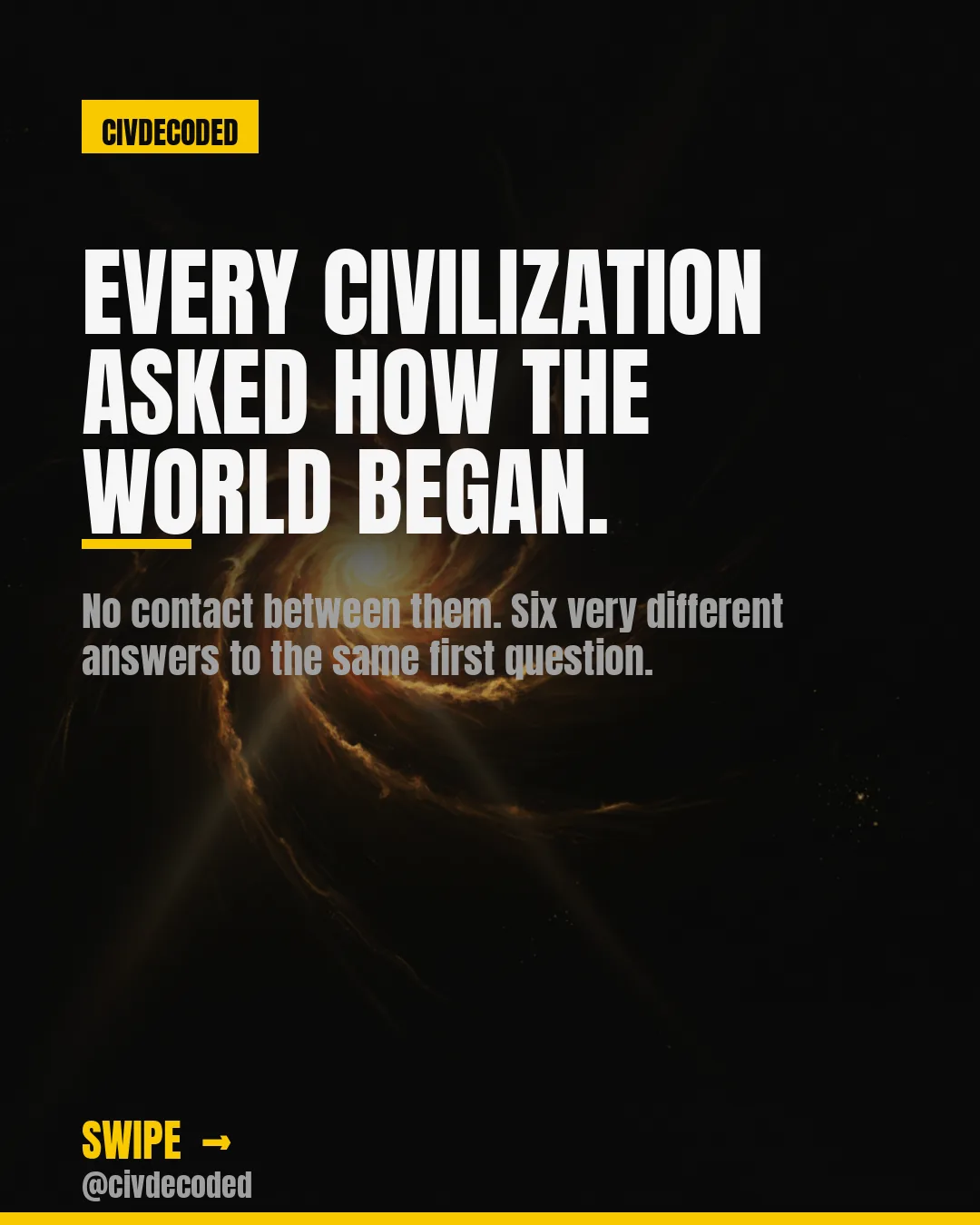
Cover — every civilization asked how the world began.
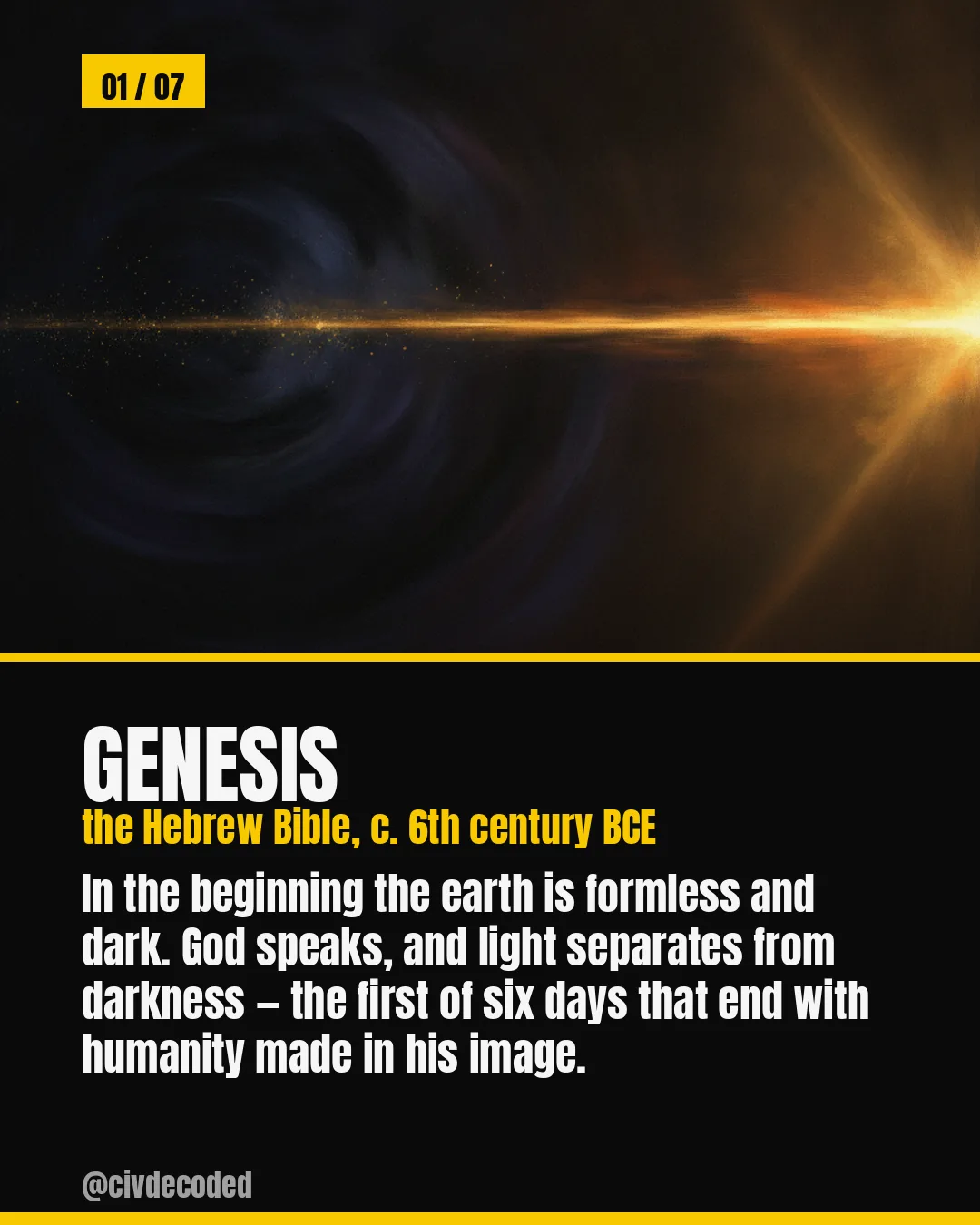
Genesis (Hebrew Bible, c. 6th century BCE) — God speaks and light separates from darkness, the first of six days ending in humanity made in his image.
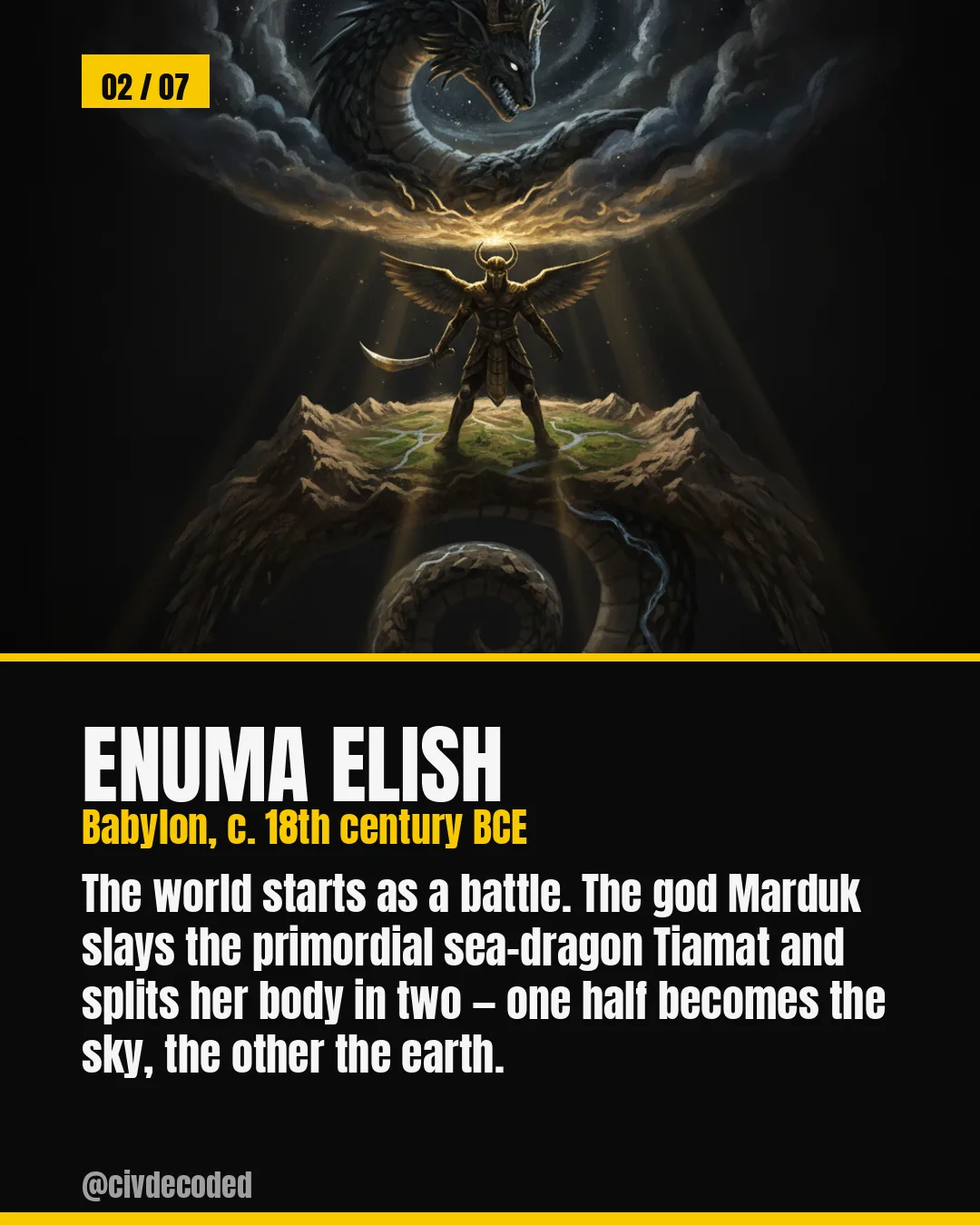
Enuma Elish (Babylon, c. 18th century BCE) — the god Marduk slays the sea-dragon Tiamat and splits her body into sky and earth.
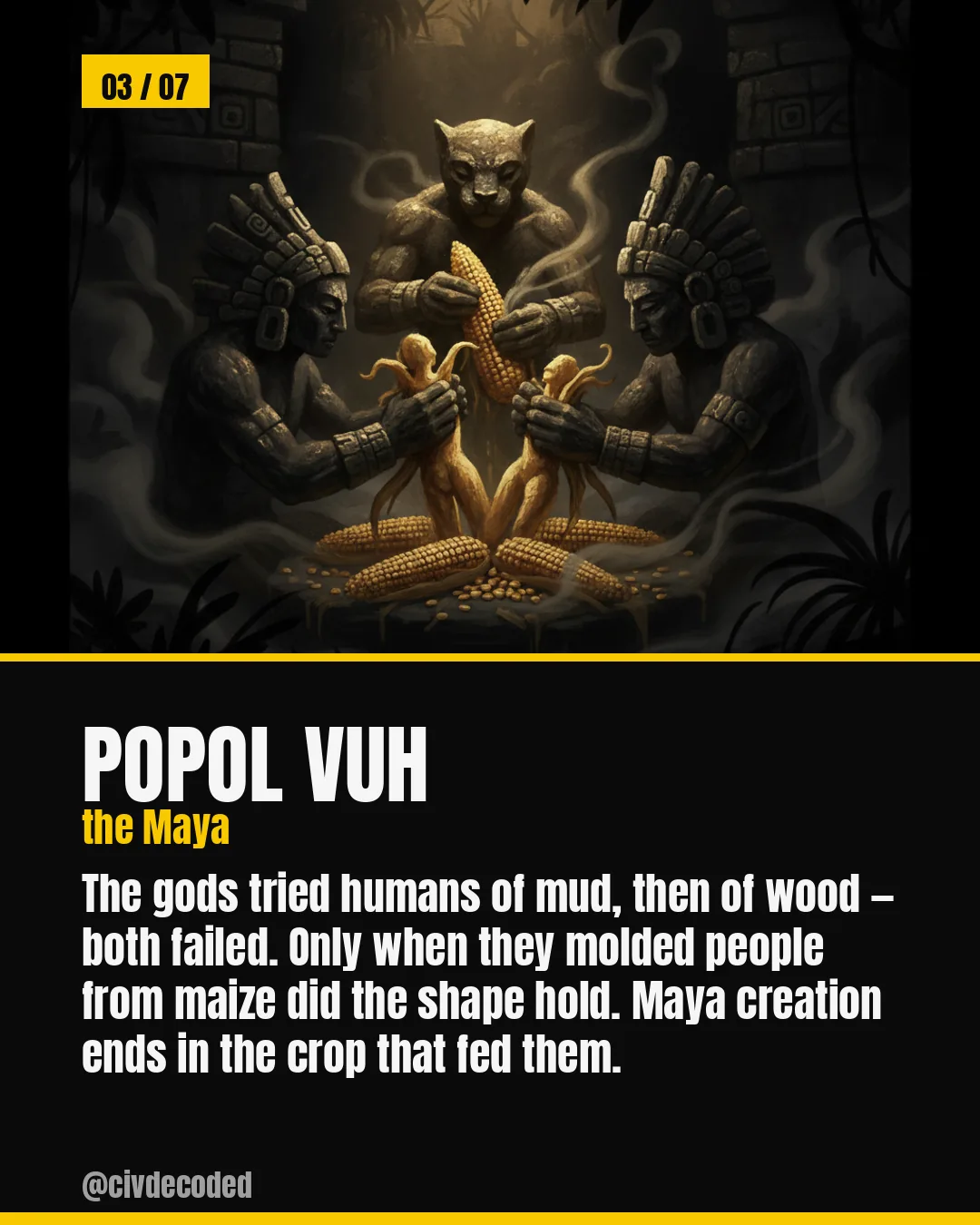
Popol Vuh (the Maya) — after humans of mud and wood fail, the gods mold people from maize and the shape finally holds.
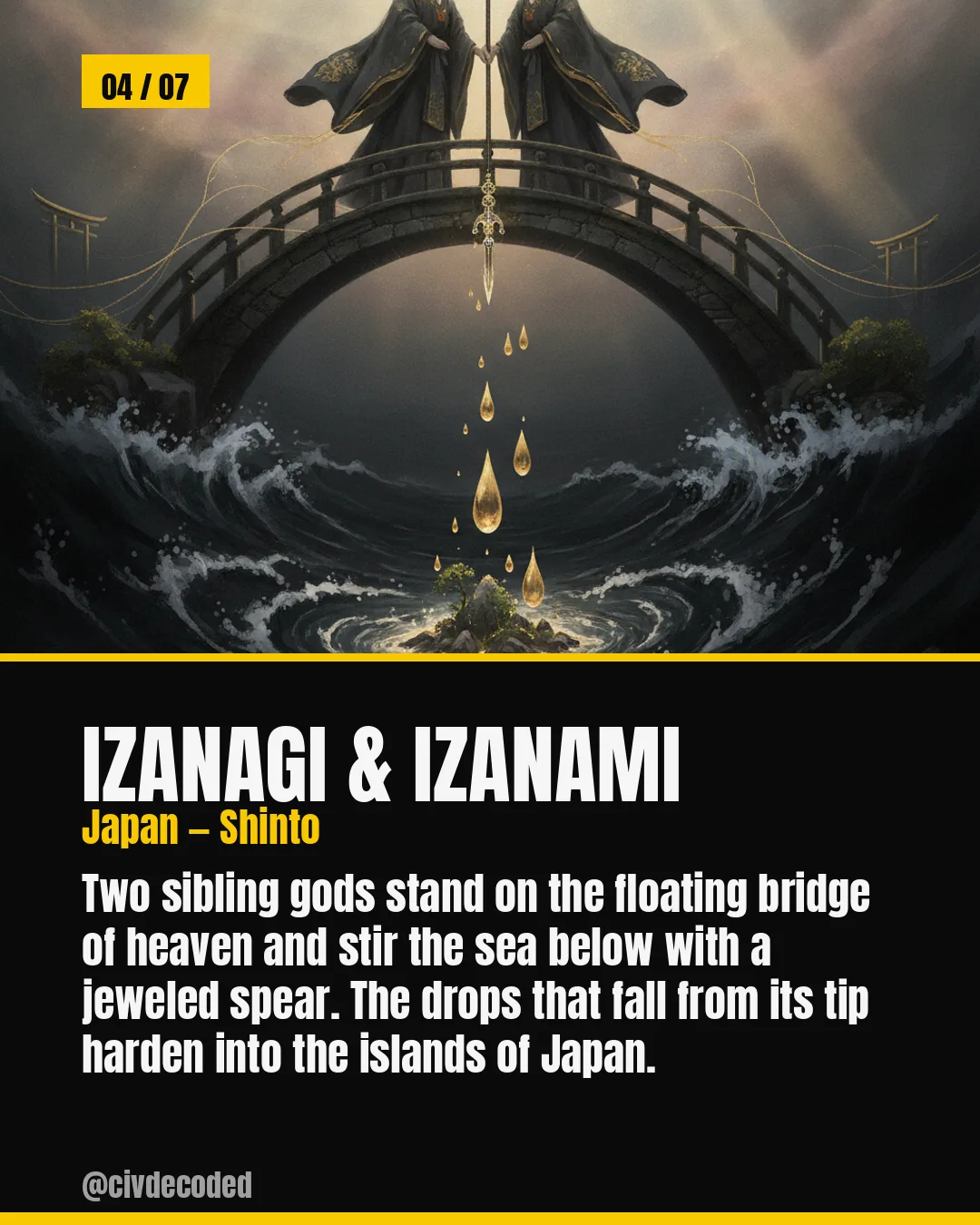
Izanagi & Izanami (Japan, Shinto) — two sibling gods stir the sea from the floating bridge of heaven with a jeweled spear; the falling drops harden into the islands of Japan.
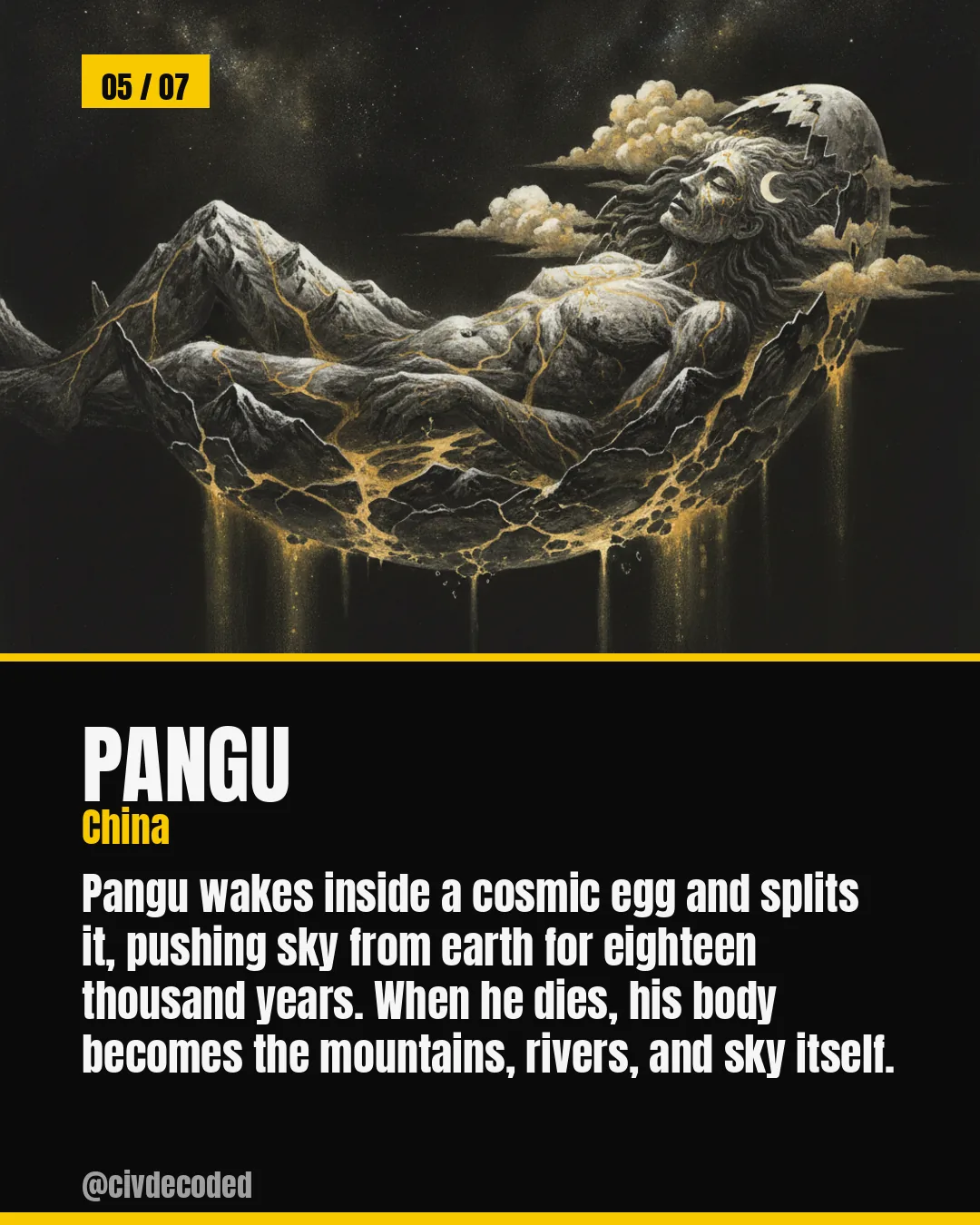
Pangu (China) — Pangu wakes inside a cosmic egg and pushes sky from earth for eighteen thousand years; his body becomes the mountains, rivers, and sky.
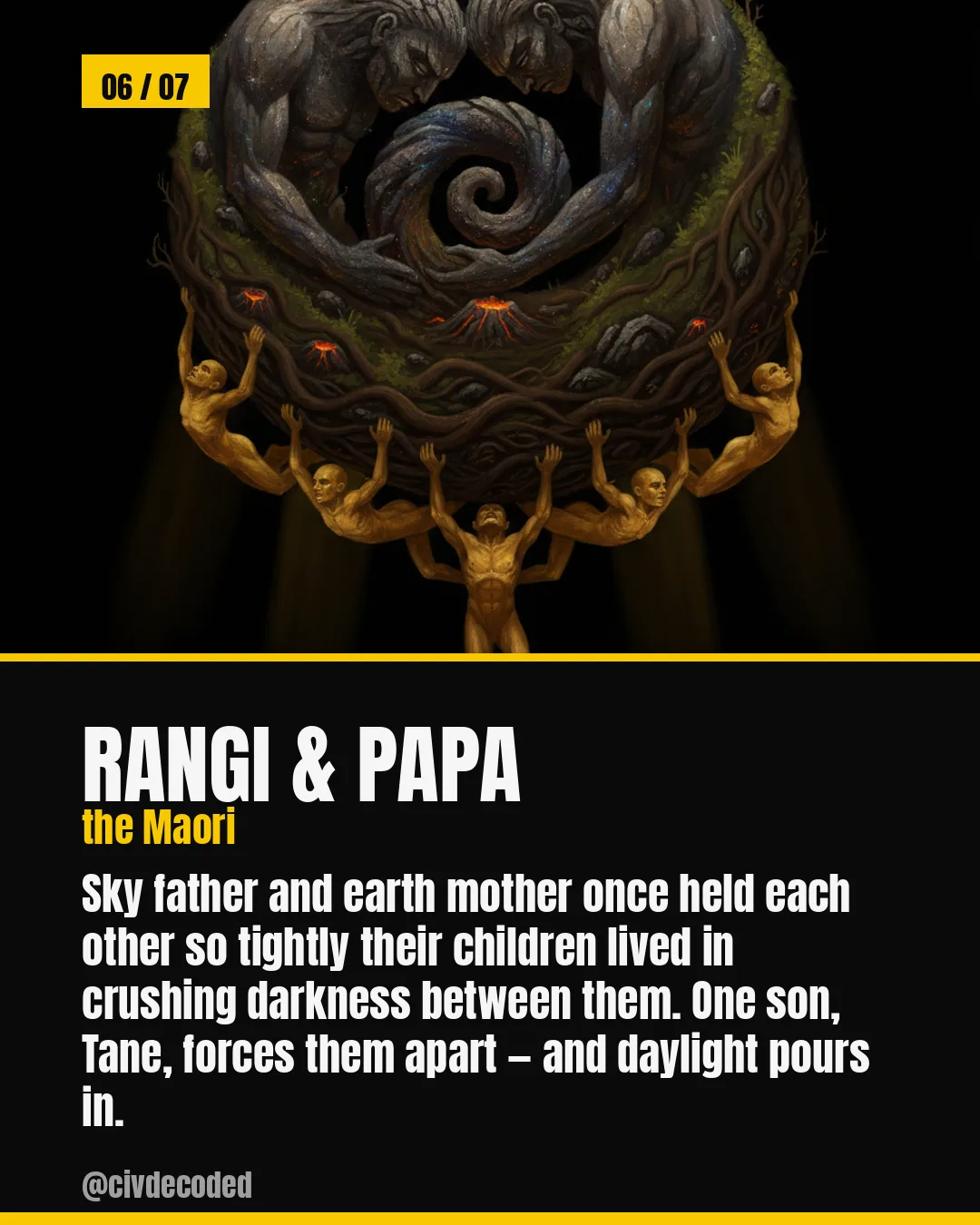
Rangi & Papa (the Maori) — sky father and earth mother hold each other so tightly their children live in crushing darkness, until their son Tane forces them apart and daylight pours in.
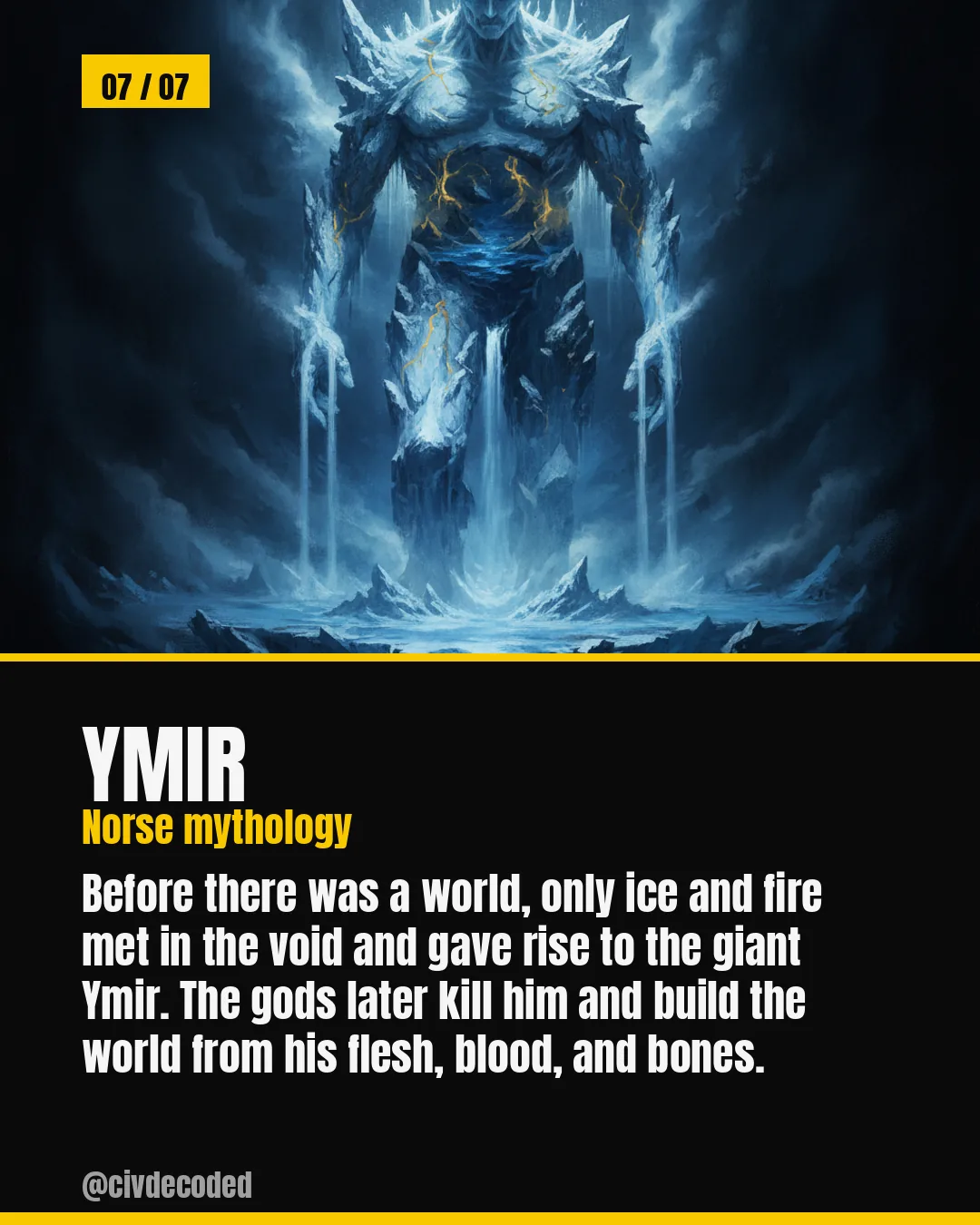
Ymir (Norse mythology) — ice and fire meet in the void and give rise to the giant Ymir; the gods kill him and build the world from his flesh, blood, and bones.
Follow CivDecoded for more history, decoded through data.

1 / 9

Seven civilizations with no contact between them each answered the same question: how did the world begin. Genesis splits light from darkness over six days; the Babylonian Enuma Elish splits a slain sea-dragon into sky and earth; the Maya's Popol Vuh only succeeds on its third attempt, molding humans from maize. Norse mythology builds the world from a giant's corpse, and the Maori's sky father and earth mother are pried apart by their own son to let in daylight.