← All carousels

Every empire in history followed the same arc.

Ibn Khaldun mapped this seven-stage cycle in 1377 — asabiyyah to collapse — and it still holds.
Cover — every empire in history followed the same arc, mapped by Ibn Khaldun in 1377.
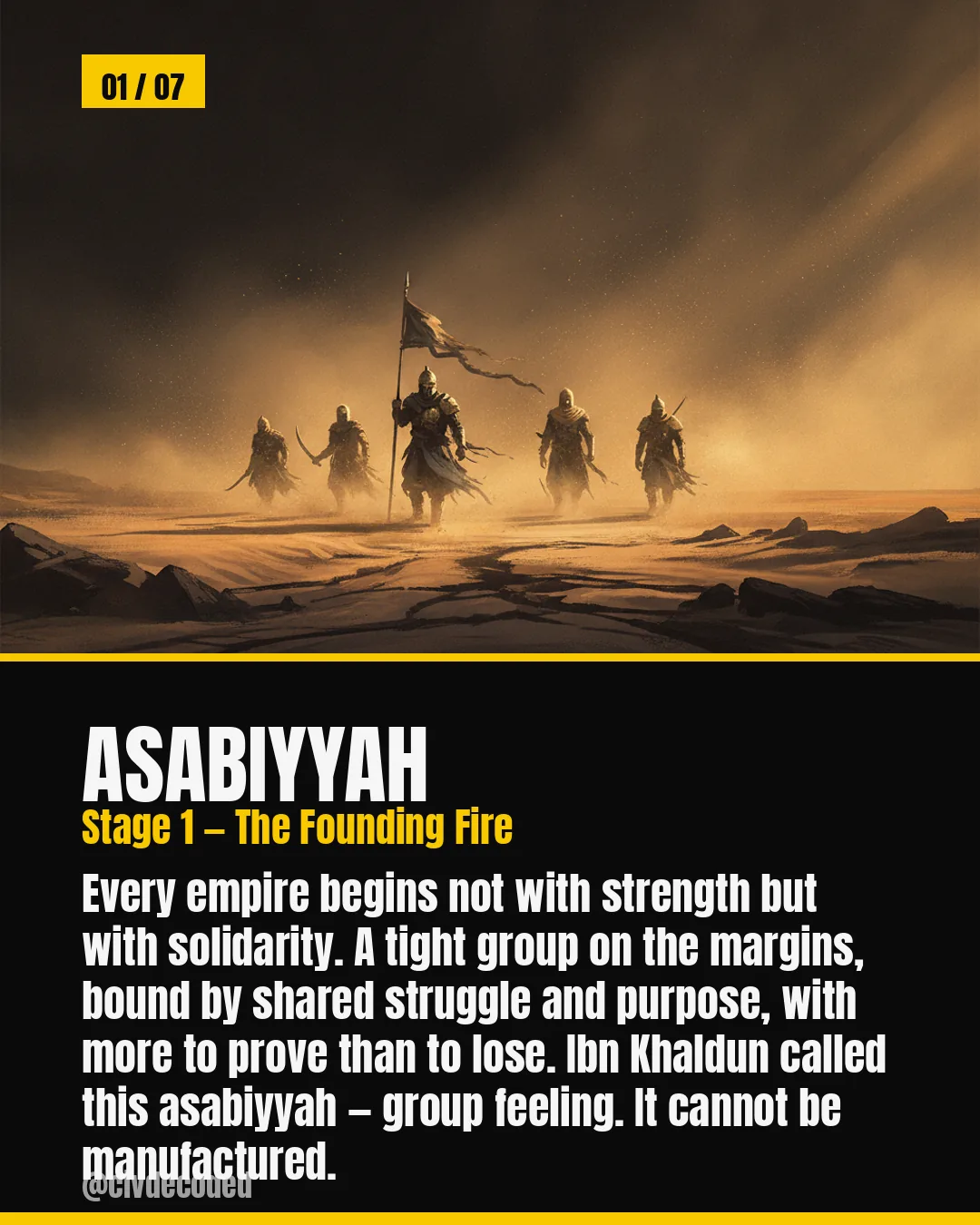
Asabiyyah, Stage 1 — The Founding Fire: every empire begins with the group solidarity of a tight founding group on the margins, bound by shared struggle.
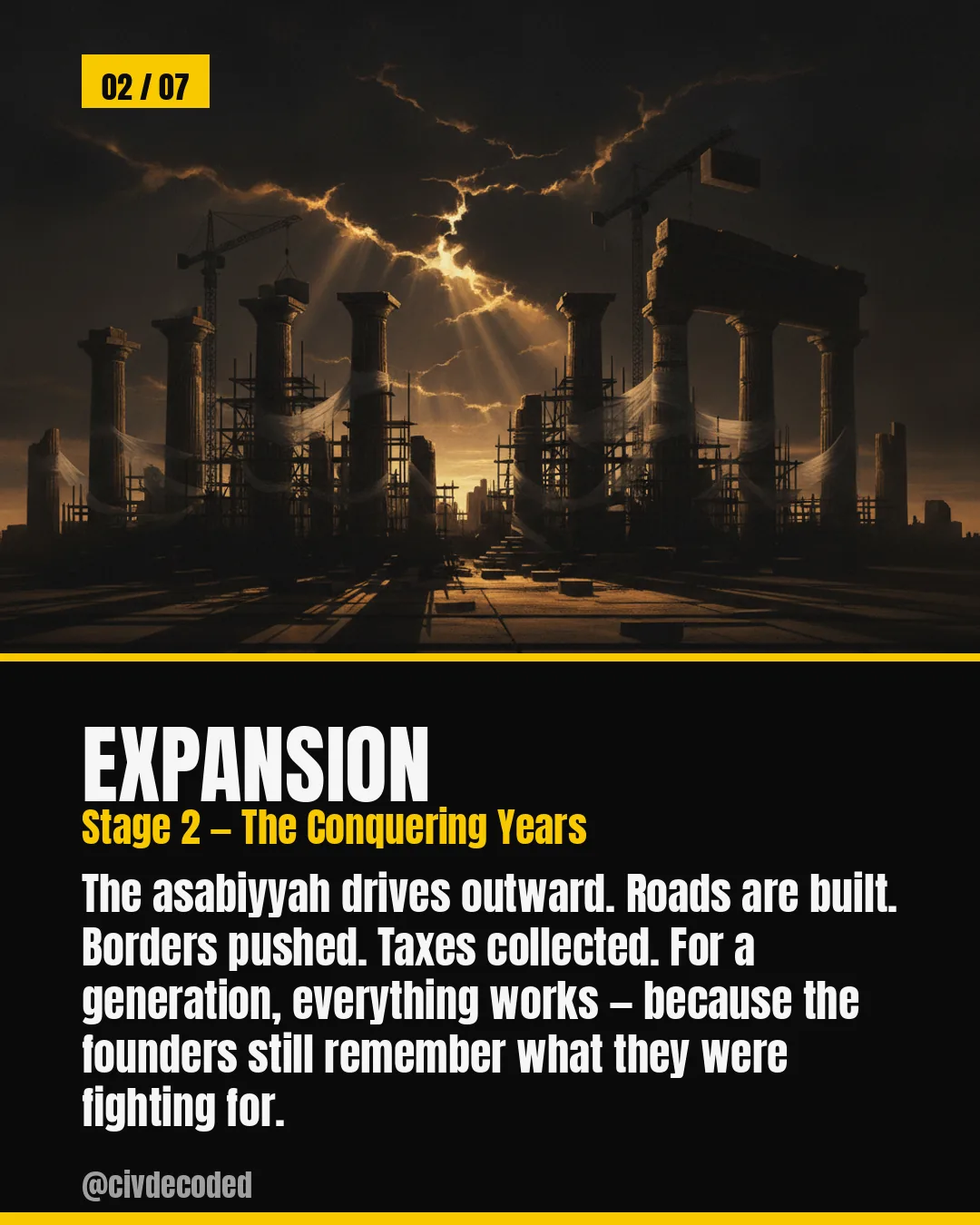
Expansion, Stage 2 — The Conquering Years: asabiyyah drives outward as roads are built, borders pushed, and taxes collected while the founders still remember what they were fighting for.
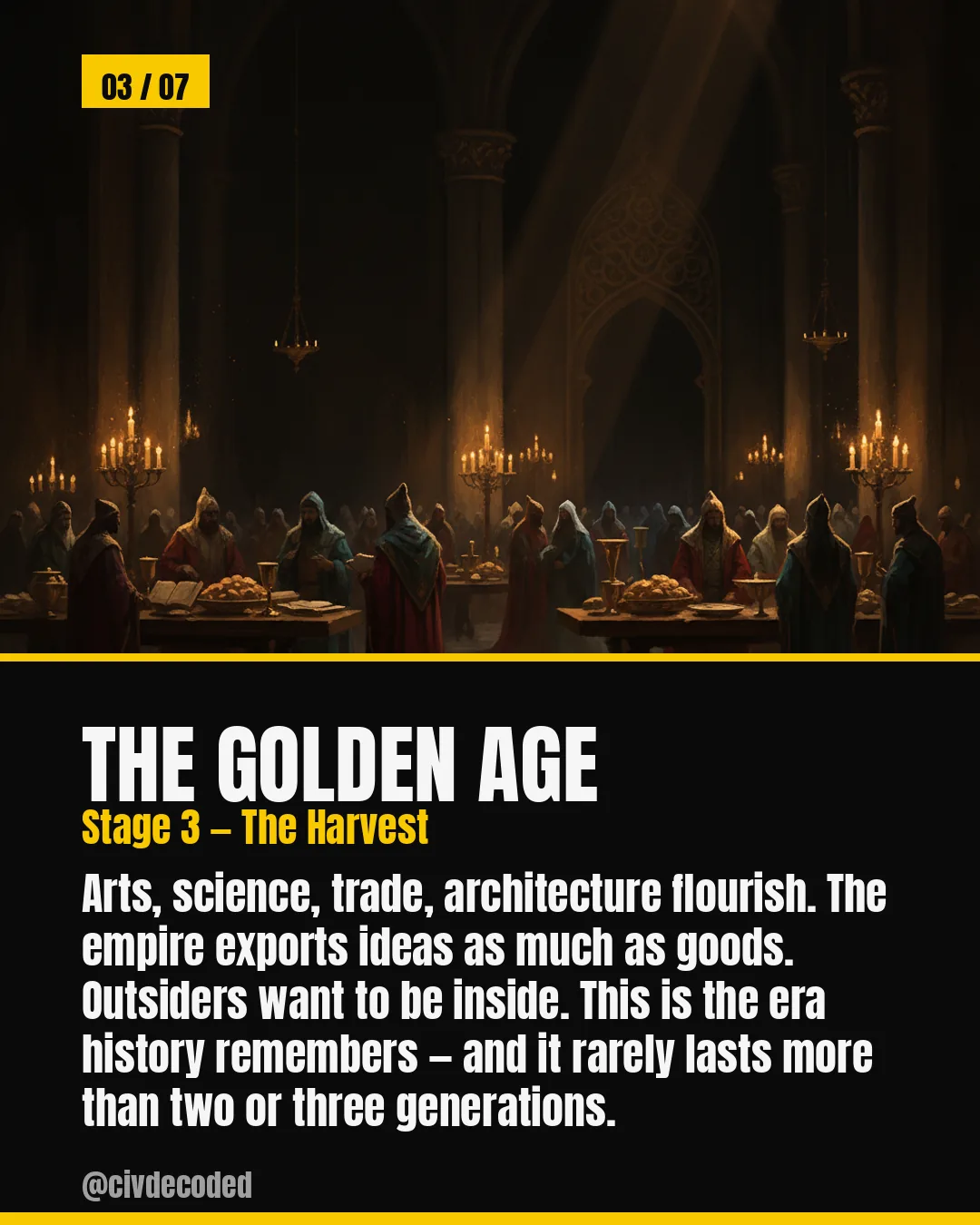
The Golden Age, Stage 3 — The Harvest: arts, science, trade, and architecture flourish, and outsiders want in — an era that rarely lasts more than two or three generations.
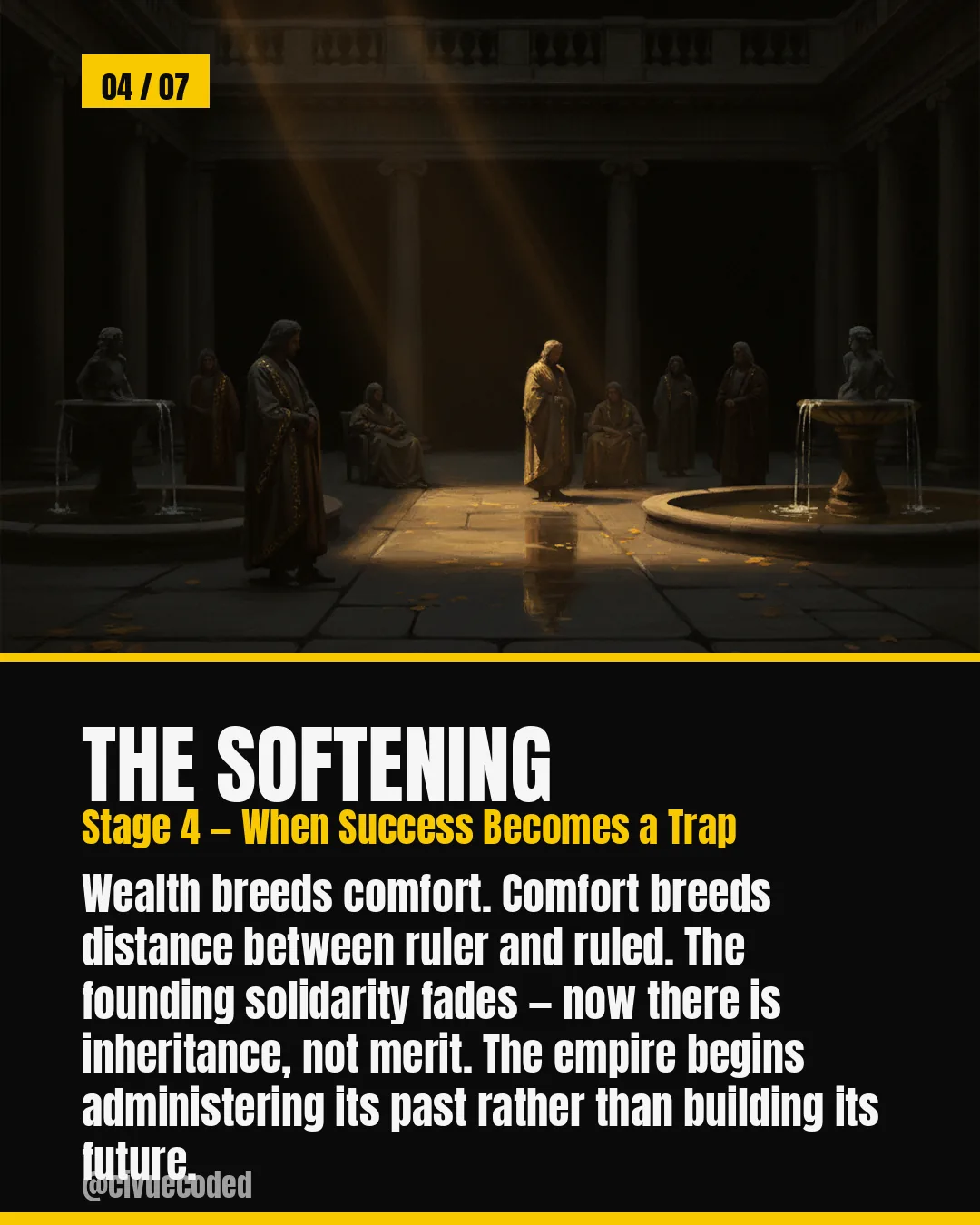
The Softening, Stage 4 — When Success Becomes a Trap: wealth breeds comfort, comfort breeds distance between ruler and ruled, and inheritance replaces merit.
Fragmentation, Stage 5 — The Cracks Appear: provinces stop paying tribute, generals become power brokers, and each crisis is handled at the cost of causing the next one.
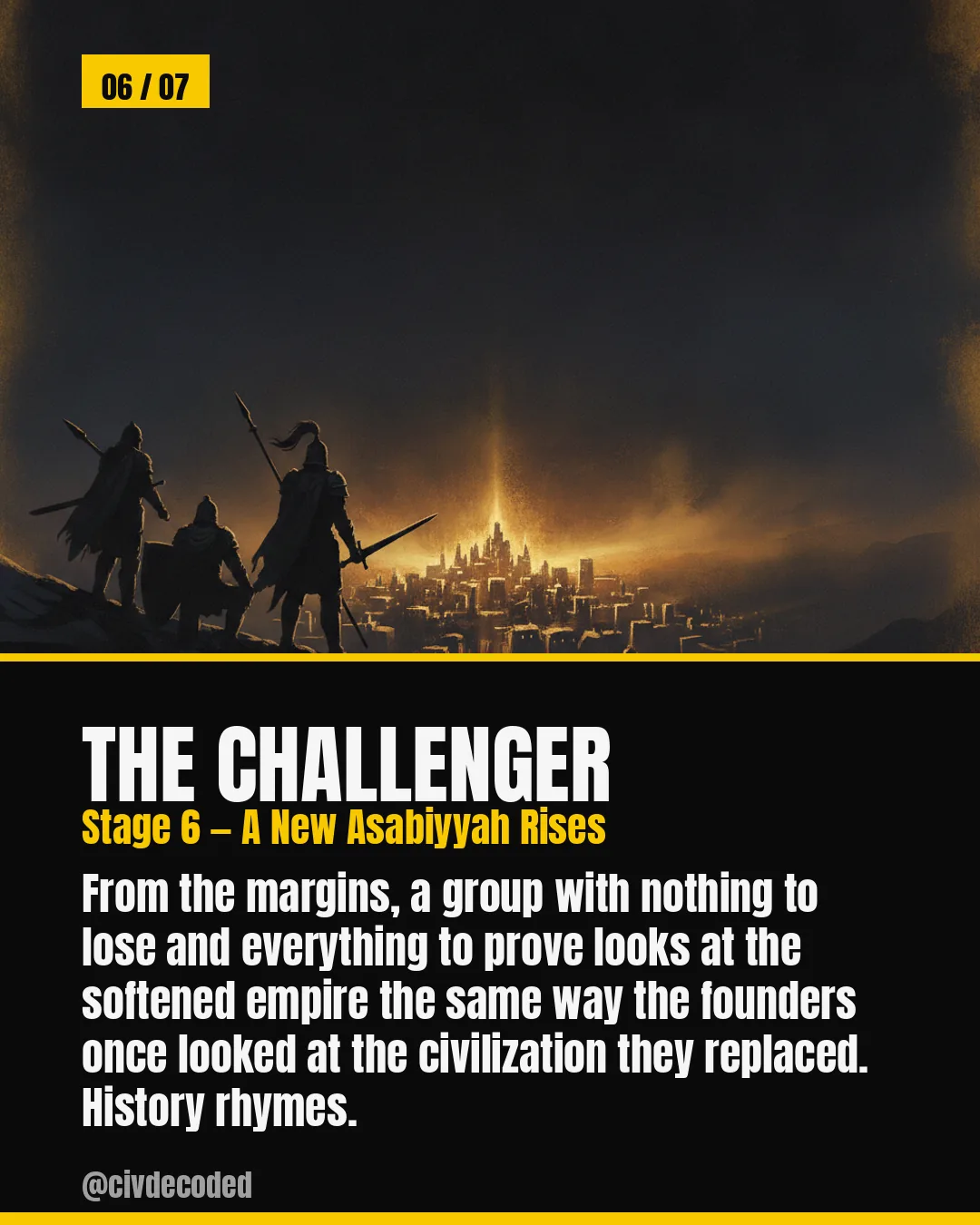
The Challenger, Stage 6 — A New Asabiyyah Rises: a marginal group with nothing to lose looks at the softened empire the way the founders once looked at what they replaced.
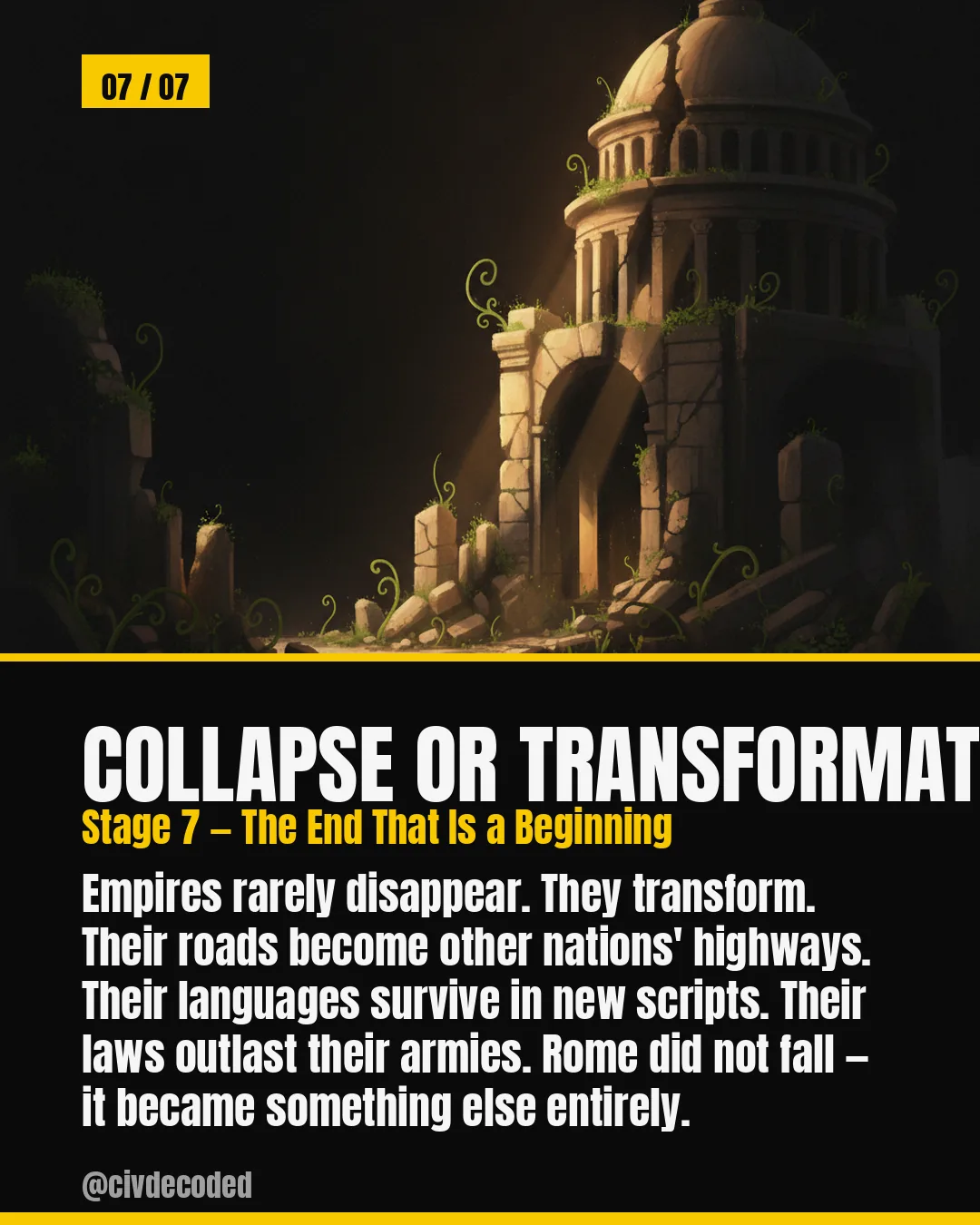
Collapse or Transformation, Stage 7 — The End That Is a Beginning: empires rarely disappear, they transform — Rome did not fall, it became something else entirely.
Follow CivDecoded for more history, decoded through data.

1 / 9

In 1377, the Arab historian Ibn Khaldun mapped a recurring seven-stage cycle behind the rise and fall of empires. It starts with asabiyyah — the group solidarity of a marginal founding group — moves through conquest and a golden age, then softens into comfort, fragmentation, and a new challenger rising from the margins. The cycle rarely ends in disappearance: empires transform, their roads, languages, and laws outliving their armies.