← All carousels

Every great civilization was built on one engineering trick.

Seven irrigation systems — from Persian qanats to Roman aqueducts, all solving the same problem: water in the wrong place.
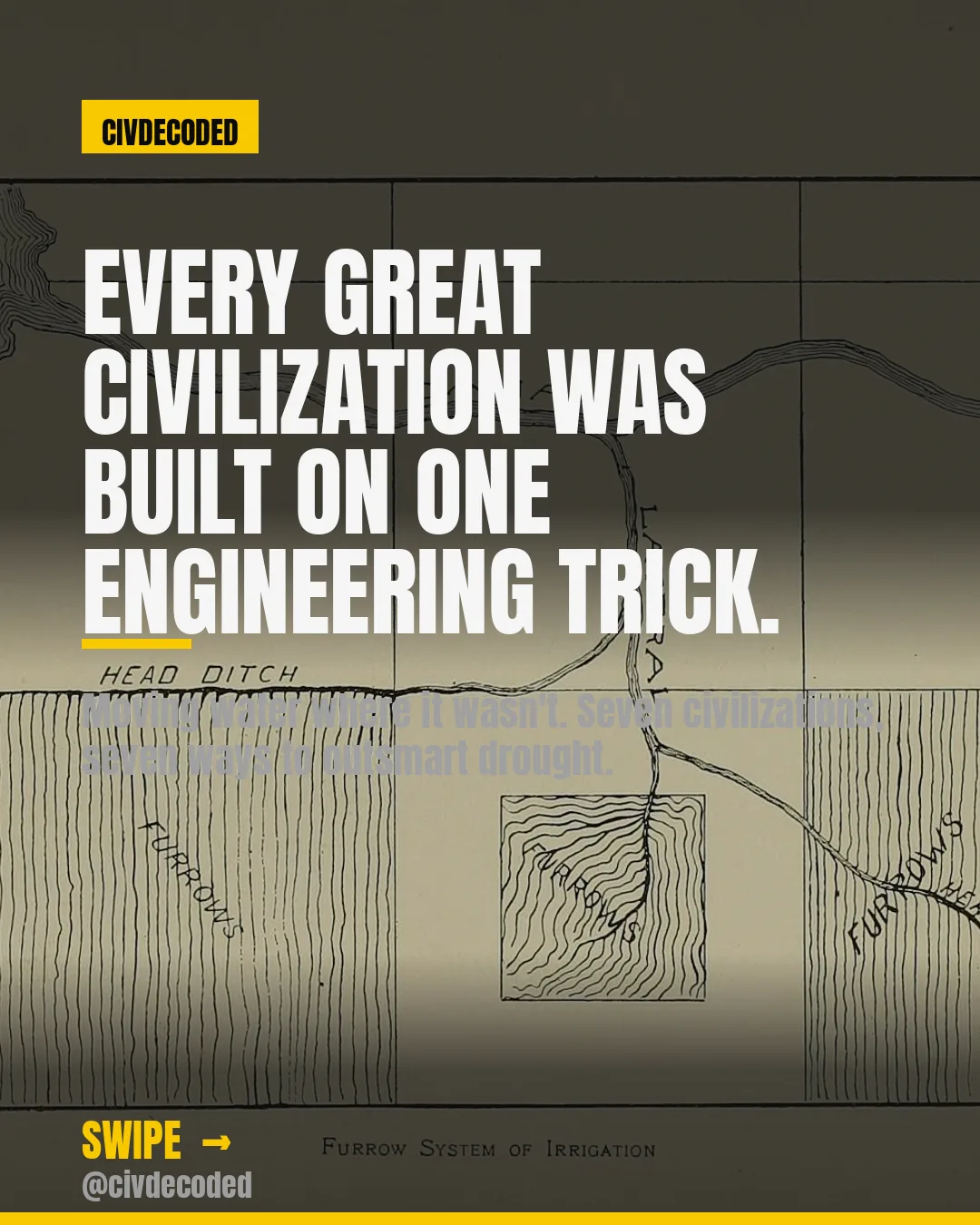
Cover — every great civilization was built on one engineering trick.
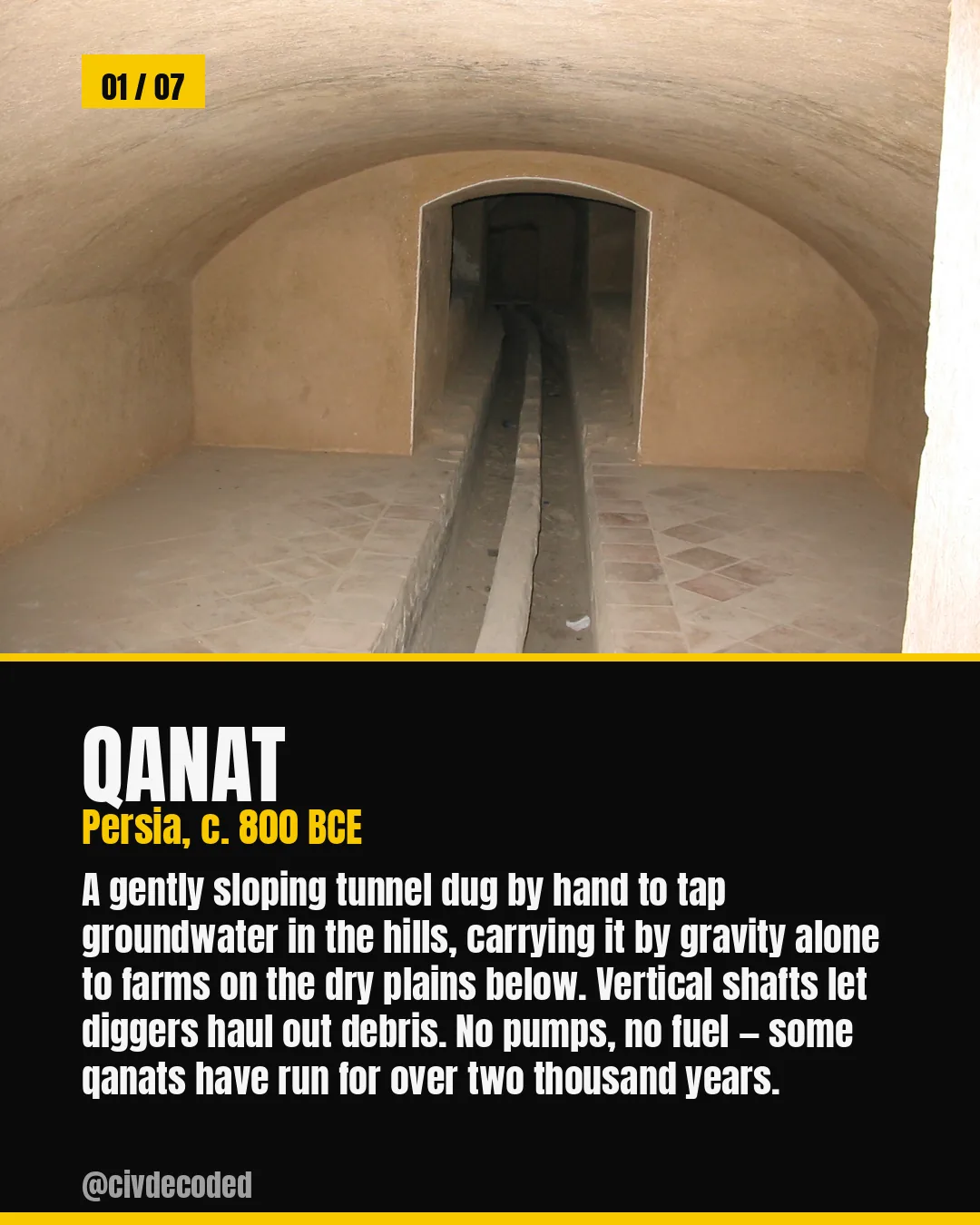
Qanat — Persia, c. 800 BCE: a gently sloping tunnel dug by hand to carry groundwater by gravity alone, some running over two thousand years
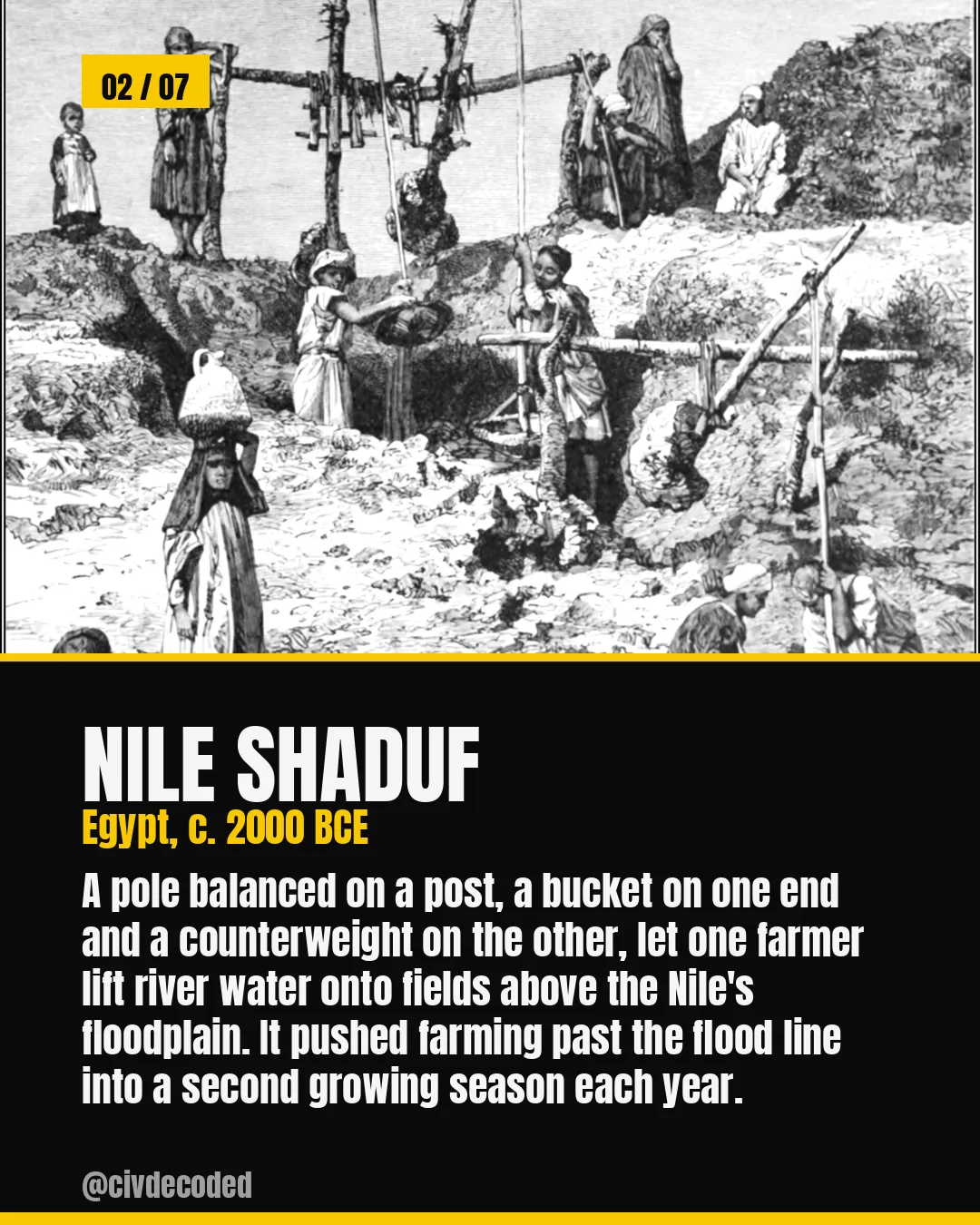
Nile shaduf — Egypt, c. 2000 BCE: a counterweighted pole that let one farmer lift river water onto fields, pushing farming past the flood line
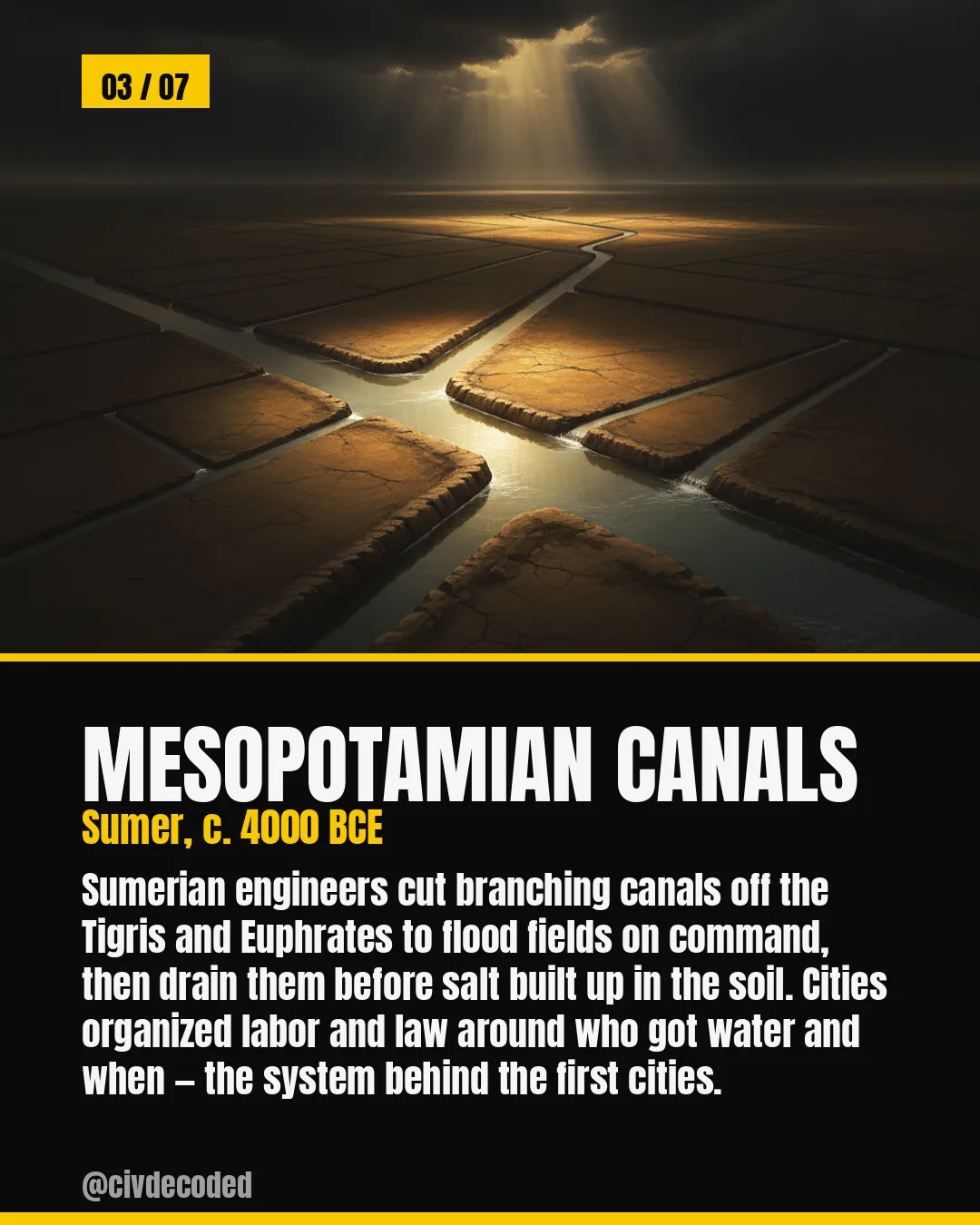
Mesopotamian canals — Sumer, c. 4000 BCE: branching canals off the Tigris and Euphrates that flooded and drained fields on command, organizing the first cities
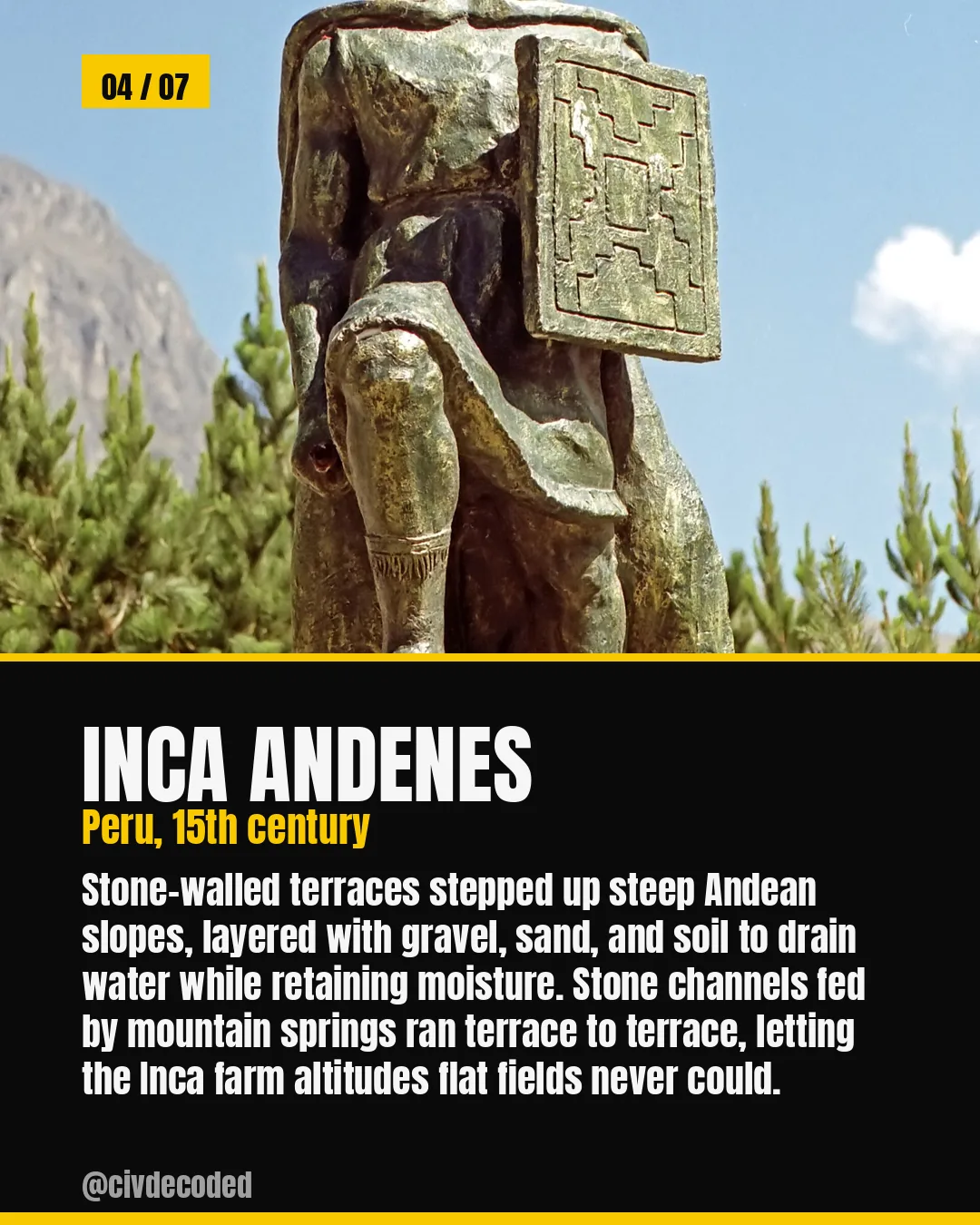
Inca andenes — Peru, 15th century: stone-walled terraces layered with gravel, sand, and soil, letting the Inca farm altitudes flat fields never could
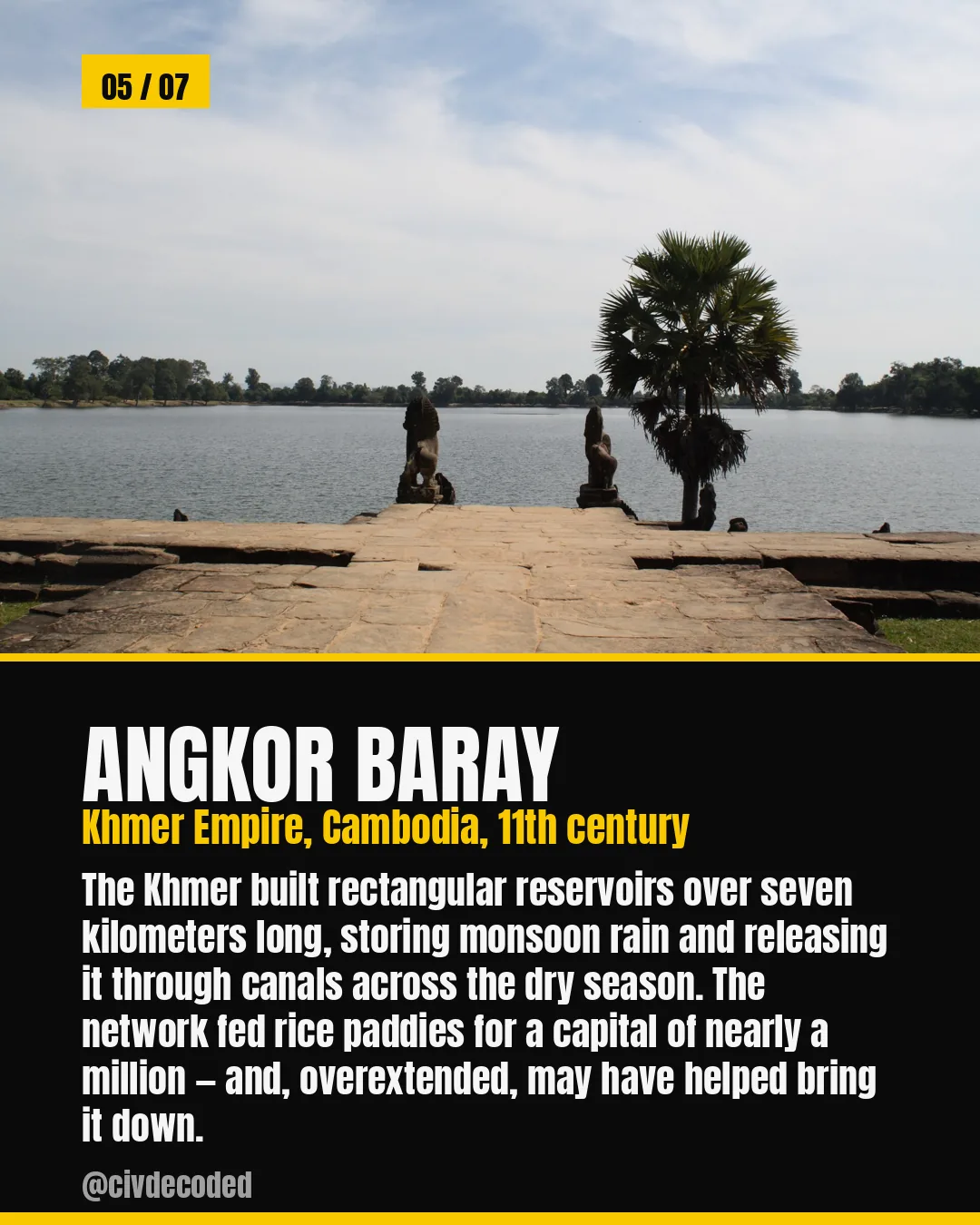
Angkor baray — Khmer Empire, Cambodia, 11th century: reservoirs over seven kilometers long that stored monsoon rain to feed a capital of nearly a million
Aztec chinampas — Tenochtitlan, Mexico, 14th century: floating fields of lake mud and reeds, with canals doubling as irrigation and canoe highways
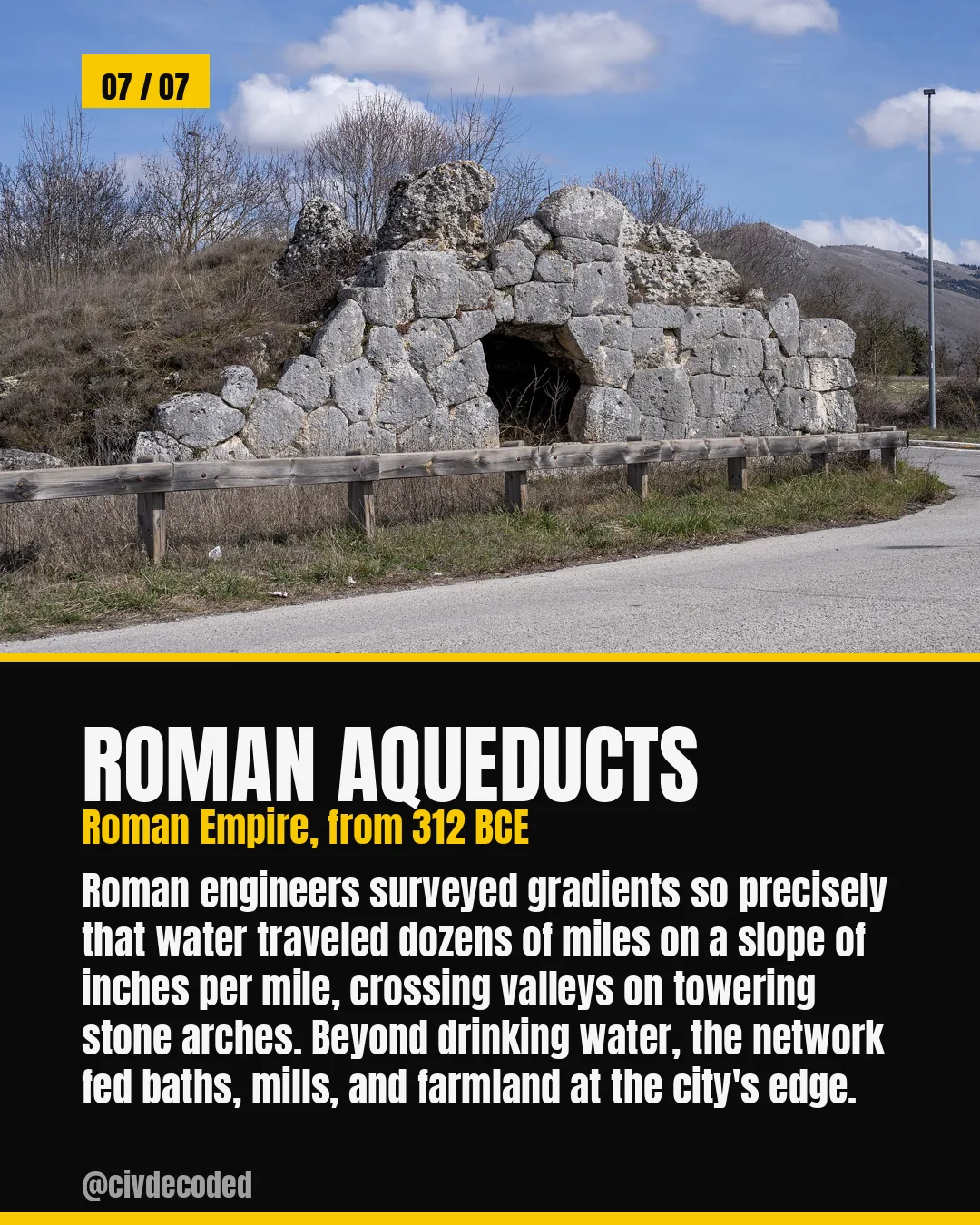
Roman aqueducts — Roman Empire, from 312 BCE: engineered gradients so precise that water traveled dozens of miles on a slope of inches per mile
Follow CivDecoded for more history, decoded through data.

1 / 9

Persian engineers dug sloping tunnels to move groundwater by gravity alone, some still running after two thousand years. Sumerians cut canals off the Tigris and Euphrates to flood fields on command. The Inca terraced entire mountainsides while Rome carried water for miles on a slope of inches. Seven civilizations, no contact with each other, all solving the same problem.